Your policy is the rule. Here is how to read it
Because Missouri has so little roof specific claim law, nearly every question on this site resolves back to the same place: the wording of your own policy. Most homeowners have never seen theirs. This page is a guided tour of the seven provisions that decide roof claims, in the order they will matter to you.
Get the right document first
Ask your insurer to email the full policy form with every endorsement, not the declarations page. The declarations page is a two sided summary of limits and deductibles. The form is forty or more pages and it is the part that contains the rules. If your agent sends the declarations page again, ask again and use the words "the complete policy form including all endorsements".
1. Actual cash value or replacement cost
This is the first fork and it changes everything downstream. Replacement cost means the policy is promising the cost to replace the roof with like material at today's prices. Actual cash value means replacement cost minus depreciation for age and wear, and on a twenty year old roof the depreciation can be most of the number. Some policies are replacement cost for the dwelling generally but actual cash value for the roof surfacing specifically, sitting in an endorsement that most people have never opened.
2. The roof surfacing schedule
A newer and increasingly common endorsement. Instead of a straight replacement cost promise, the roof is paid on a table: a declining percentage of replacement cost based on the age of the roof and sometimes the material. A fifteen year old three tab roof might be scheduled at a fraction of what you would expect. If your policy has one of these, find the table, find your roof's age, and you have your answer before anybody climbs a ladder.
3. Recoverable depreciation
On a replacement cost policy the first payment is usually actual cash value, with the depreciation withheld and released when the work is completed and invoiced. That release is time limited. Find the sentence that says how long you have and treat that date as the real deadline on the whole project, because it is.
4. The deductible, and whether there are two of them
Many Missouri policies now carry a separate wind and hail deductible alongside the all peril one, and it is frequently expressed as a percentage of the dwelling limit rather than a flat sum. One per cent of a $350,000 dwelling limit is $3,500. Two per cent is $7,000. Homeowners who believe their deductible is $1,000 because that is the figure they remember from binding the policy are regularly wrong by several thousand dollars, and they find out on the day the first payment arrives.
5. Cosmetic damage exclusions
An endorsement excluding damage to the roof surface that affects appearance but not function. Where one applies, dented soft metals and granule scouring that has not compromised the mat can be excluded from cover entirely. This single endorsement resolves more Missouri hail arguments than any matching question does, and it is one of the least noticed things in a modern homeowner policy.
6. Ordinance or law coverage
Building codes change. If your municipality now requires ice and water shield in valleys, a different fastening pattern, or drip edge where the original roof had none, the additional cost of complying is not part of replacing what was there. It comes out of ordinance or law coverage if your policy has it, and out of your own pocket if it does not. Check the limit as well as whether it exists, because it is often a small percentage of the dwelling limit.
7. The appraisal clause
Most policies contain a procedure for resolving a disagreement about the amount of a loss, as distinct from whether it is covered at all. Each side appoints an appraiser, the two appoint an umpire, and a decision by any two of them binds. It is faster and cheaper than litigation. It does not decide coverage questions, and invoking it is a decision worth taking advice on rather than reading about on a website.
Every one of the seven above lives in your own policy form. None of them is a Missouri rule. That is the whole argument for reading the document.
What "functional damage" means on an asphalt roof
Adjusters and contractors both use the phrase and they do not always mean the same thing. On an asphalt shingle, a hail strike that matters usually shows as a bruise: granules displaced in a roughly circular area, and a mat underneath that gives slightly under a thumb because the fibreglass has fractured. It frequently does not look dramatic and it very often has not made a hole. A roof can be functionally compromised and still look fine from the pavement.
What that means practically is that the disagreement in a Missouri hail claim is rarely about whether it hailed. It is about whether what is on the roof is hail bruising or ordinary granule loss from age, and that is a question decided by close photographs, test squares, and the condition of soft metals, vents and window screens that hail also strikes and that do not weather the same way shingles do.
Which brings it back to the same place. Get it documented properly by a contractor who does that work, keep the file, read your policy, and understand that in Missouri the contractor's role stops at producing the evidence. What that actually looks like is here.
Not insurance advice
General descriptions of common policy provisions, written for homeowners. Yours may differ in every particular, and if it does, yours governs.
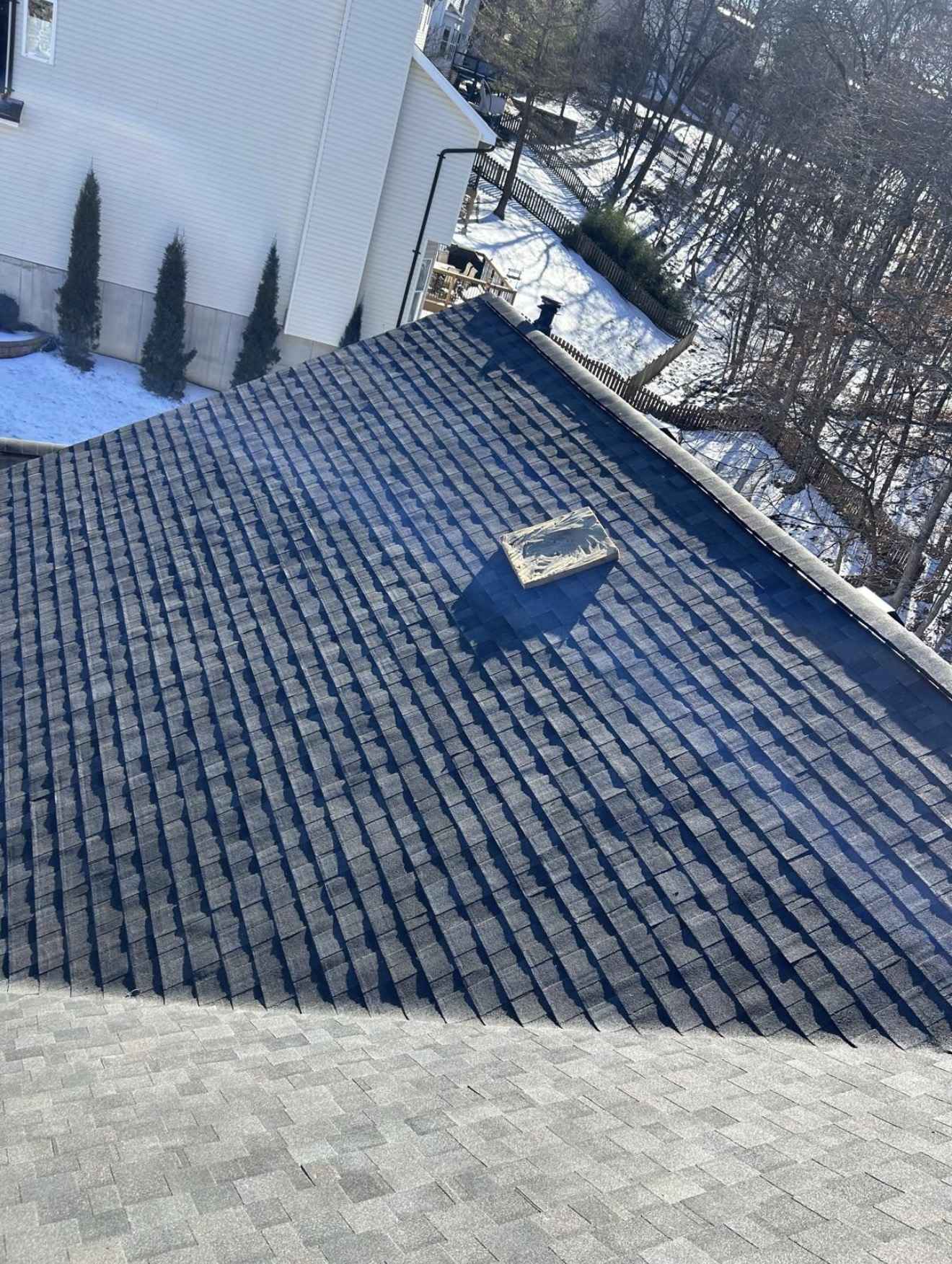
Documentation, in your name, whether or not you hire anyone
Keys Roofing is a roofing, gutter and downspout company working in greater St. Louis, and that is the only part of Missouri it can send anyone to. If your house is outside that radius, use the guide and hire locally. Nothing here changes based on where you live.
What an inspection produces is a set of photographs, slope by slope measurements and a written scope of the work the roof needs. You keep that file. If there is a claim in your story, the claim stays in your name and in your hands: under RSMo 407.725 a Missouri roofing contractor shall not represent or negotiate an owner's insurance claim, and Keys does not. The contractor's job is to document the roof accurately and to be on the roof as the contractor when the adjuster inspects it.
Ask for a roof inspection
Goes to Keys Roofing. Greater St. Louis only. No obligation, and no part of this form asks anything about your policy limits.
Nothing you type here is sent to any insurer, and nobody from Keys will contact one on your behalf.