What a roofer can do, once you take the illegal part out
The statute removes advocacy from the contractor's job. Homeowners who read that conclude a roofer is no use in a claim at all, which is the opposite of true. What is left is the part that actually decides most claims: evidence, produced properly, by somebody who knows what a roof is supposed to look like.
"A contractor shall not represent or negotiate, or offer or advertise to represent or negotiate, on behalf of an owner or possessor of real estate on any insurance claim in connection with the repair or replacement of roof systems."
RSMo 407.725(6)
Everything below sits on the permitted side of that sentence. None of it involves speaking for you, submitting anything for you, or arguing anything on your behalf.
The inspection
Somebody gets on the roof. That sounds obvious and it is not: a meaningful proportion of roof "inspections" in this market happen from a driveway, from a ladder at the eave, or from a drone at sixty feet, and none of those will find a hail bruise. A proper inspection walks the slopes, checks each elevation separately because hail is directional, looks at the soft metals, vents, flashings and gutter aprons, and marks test areas.
The photographs
Wide shots that establish which elevation is which, then close work with something for scale. Photographs of collateral evidence that is not the shingle: dented gutter aprons, bruised soft metal vent caps, damaged window screens, marks on a deck rail or an air conditioner fin. On a contested hail claim that collateral evidence often carries more weight than the shingle itself, because shingles age and gutter aprons do not.
The measurements
Slope by slope, with pitch, and a count of ridge, hip, valley, rake and eave lengths. Penetration count. Layer count. Decking type and condition where it is visible. This is the arithmetic a scope is built from, and an estimate that does not have it is a guess with a letterhead.
The written scope
A document listing what the roof needs, line by line, with the materials named by manufacturer and product line, quantities, and the price. Not a number on the back of a card. The scope is the thing you compare between bidders, the thing you attach if a field estimate has missed the decking or the drip edge, and the thing you keep whether or not you ever hire anybody.
Being on the roof on adjuster day
Entirely permitted, and worth arranging. The contractor is present as the contractor: walking the same roof at the same time, showing where the test squares are, pointing at the flashing detail. What the contractor does not do is speak for you about coverage, amounts or what the carrier ought to pay. You are there. It is your claim and your conversation.
And what it must not do
The prohibited list is short and absolute. A Missouri roofing contractor may not represent you with your insurer, may not negotiate with your insurer on the claim, may not offer to do either, and may not advertise that it will. It may not promise to pay, waive, absorb or rebate any part of your deductible. RSMo 407.725(7) makes a breach of any of that an unfair practice under the Missouri Merchandising Practices Act.
There is a second reason to care beyond the legal one. A contractor whose pitch is that they will take the claim off your hands is a contractor whose commercial interest is the settlement figure rather than the roof. Those interests are not identical and occasionally they point in opposite directions.
The honest arrangement is the boring one. The contractor produces evidence and a price. You run the claim, with a public adjuster or a lawyer if it gets difficult. The roof gets built to the scope you agreed and paid for.
What Keys Roofing does, plainly
Roofing, gutters and downspouts. No siding, no windows, no commercial work. Shingle work is Atlas and Malarkey and nothing else. Licensed and insured. Greater St. Louis, which is a smaller area than the guide you are reading covers.
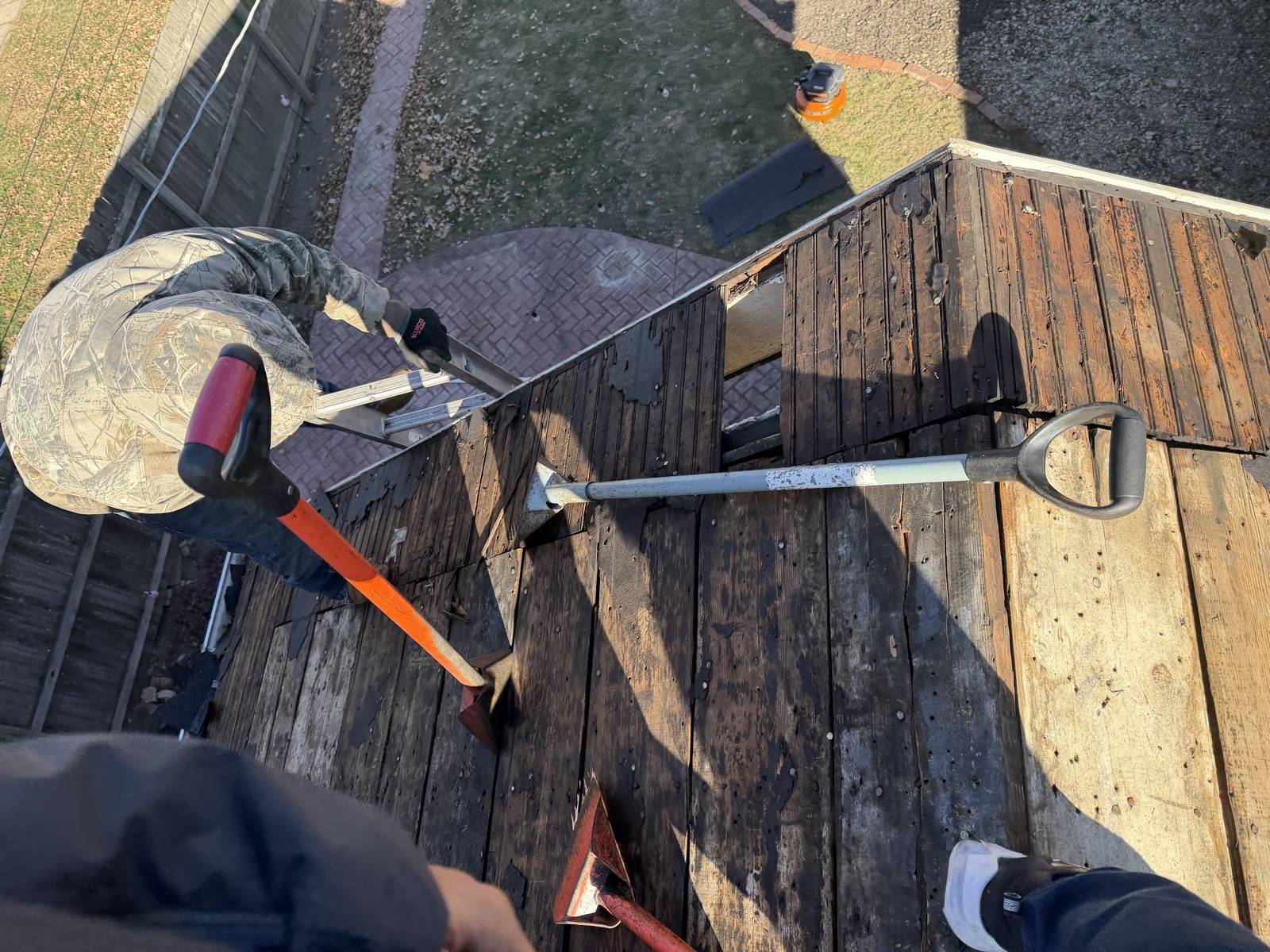
- Replacement and tear-offThe old covering comes off, the decking is inspected while it is open, and soft boards are replaced rather than shingled over. The per board price is agreed in writing before the roof is opened.
- Repair and leak tracingFlashing, pipe boots, valleys, ridge. Finding where water is entering is a different skill from replacing a roof, and it is frequently the cheaper and correct answer.
- Inspection with photographs and a written scopeDocumentation you keep whether or not you hire anybody. If there is a claim, the claim stays yours.
- Seamless gutters, guards and downspoutsFormed on site, including reroutes and extensions that carry water away from the foundation rather than into it.
The standing statement
Keys Roofing does not represent or negotiate any homeowner's insurance claim and does not offer to, because RSMo 407.725 forbids it. Keys makes no offer of any kind regarding a deductible. Nothing on this site is legal advice or insurance advice.
Documentation, in your name, whether or not you hire anyone
Keys Roofing is a roofing, gutter and downspout company working in greater St. Louis, and that is the only part of Missouri it can send anyone to. If your house is outside that radius, use the guide and hire locally. Nothing here changes based on where you live.
What an inspection produces is a set of photographs, slope by slope measurements and a written scope of the work the roof needs. You keep that file. If there is a claim in your story, the claim stays in your name and in your hands: under RSMo 407.725 a Missouri roofing contractor shall not represent or negotiate an owner's insurance claim, and Keys does not. The contractor's job is to document the roof accurately and to be on the roof as the contractor when the adjuster inspects it.
Ask for a roof inspection
Goes to Keys Roofing. Greater St. Louis only. No obligation, and no part of this form asks anything about your policy limits.
Nothing you type here is sent to any insurer, and nobody from Keys will contact one on your behalf.